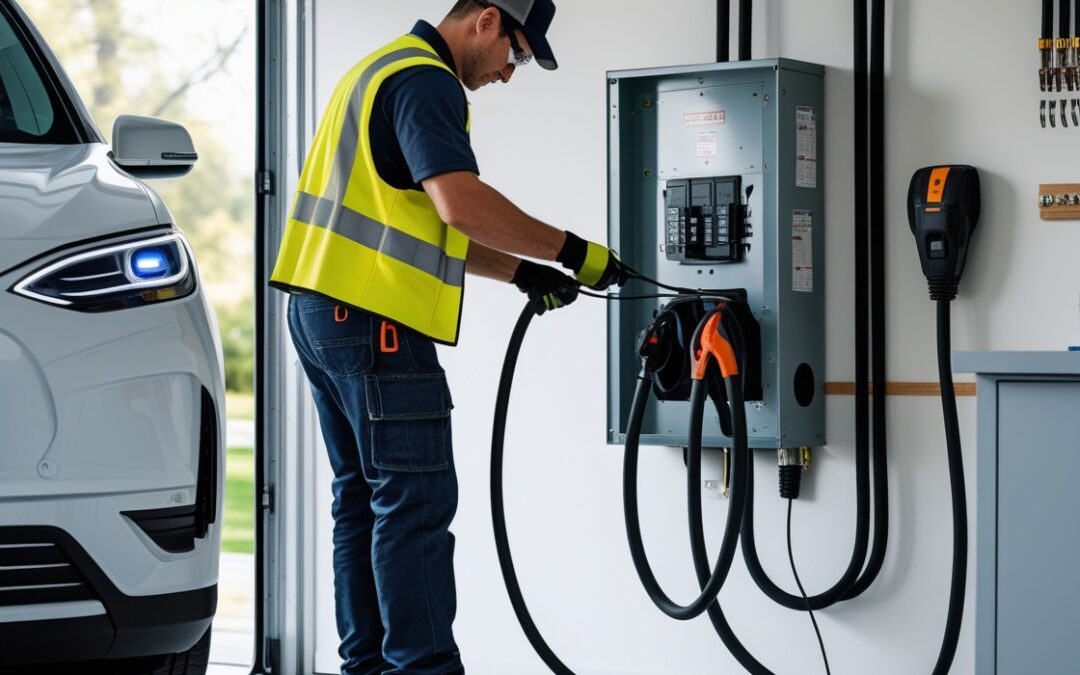
Before installing a home EV charger, homeowners need to assess their electrical panel capacity, available breaker space, wiring condition, and proximity to the desired charging location. Most homes benefit most from a Level 2 charger, which requires a dedicated 240-volt circuit. A licensed electrician should always perform the assessment and installation.
Electric vehicles are no longer a niche product. According to the International Energy Agency, global EV sales surpassed 17 million units in 2024, and that number continues to climb. More drivers are making the switch, and for good reason: lower fuel costs, reduced emissions, and a smoother driving experience. But owning an EV comes with one key question most people don’t think about until after they’ve driven off the lot: Can my home actually support a charger?
The answer depends on several factors, from your electrical panel’s age and capacity to local code requirements. Getting it wrong can be costly or even dangerous. This guide breaks down everything you need to know before moving forward with an EV charger installation, so you can make an informed decision with confidence.
Understanding EV Charger Levels and What They Mean for Your Home
Not all EV chargers are the same. Before assessing your home’s readiness, it helps to understand the three charging levels and how they differ.
Level 1 Charging: Simple but Slow
Level 1 chargers plug into a standard 120-volt household outlet. No special wiring needed, no panel upgrades required. The trade-off? They’re slow. Most Level 1 chargers add only 3 to 5 miles of range per hour. For drivers with long daily commutes or multiple vehicles, this simply isn’t practical.
Level 2 Charging: The Right Fit for Most Homeowners
Level 2 chargers are the most popular choice for residential use, and for good reason. They operate on a 240-volt circuit, similar to what your dryer or oven uses, and can add 20 to 30 miles of range per hour. A full charge overnight is easily achievable.
Here’s what Level 2 installation typically requires:
- A dedicated 240-volt circuit — this means the charger gets its own breaker and is not sharing power with other appliances
- Adequate amperage — most Level 2 chargers run on a 40-amp, 50-amp, or 60-amp breaker, depending on the charger’s power output and your vehicle’s onboard charger capacity
- Correct wire gauge — higher amperage requires thicker wiring to handle the load safely
Level 3 Charging: Not for Residential Use
Level 3 chargers, also known as DC fast chargers, are the type you see at commercial charging stations. They require three-phase power and extremely high amperage, which is not feasible or safe for a standard home setup.
Key Factors to Check Before Installing an EV Charger at Home
Once you know you want a Level 2 charger, the next step is evaluating whether your home is actually set up to support one. Here are the main areas to look at.
Your Electrical Panel
The electrical panel, sometimes called the service panel or breaker box, is the heart of your home’s electrical system. It’s the first thing a qualified electrician will inspect before any EV charger installation.
What to look for:
- Panel capacity — most older homes have 100-amp service panels, while newer builds often have 200-amp panels. A Level 2 charger on a 50-amp breaker uses a significant portion of a 100-amp panel’s total capacity, especially when other appliances are running simultaneously
- Available breaker space — even if your panel has enough total capacity, you need an open slot for a new double-pole breaker
- Panel age and condition — panels older than 25 to 30 years may have outdated components or known safety issues. If your home still has a Federal Pacific or Zinsco panel, replacement is strongly recommended before adding any new high-draw circuits
If your panel is at or near capacity, a panel upgrade in Salt Lake City or surrounding areas may be necessary before installation can proceed. This adds to the upfront cost but is an important investment in your home’s overall safety and functionality.
Existing Wiring and Circuitry
The wiring in your home also plays a critical role. Key considerations include:
- Wire gauge — a 50-amp circuit typically requires 6-gauge copper wiring. Using undersized wire creates a fire hazard
- Wire material — aluminum wiring, common in homes built between the 1960s and 1970s, requires special attention and may need upgrading or additional connectors to handle high-amperage circuits safely
- Dedicated circuit requirement — your EV charger must be on its own dedicated circuit, not shared with any other outlets or appliances
Distance from Your Panel to the Charging Location
The further your desired charging spot is from your main electrical panel, the more materials and labor are required to run the circuit. A garage on the opposite side of the house from the panel, for example, may involve running conduit through walls, attics, or crawl spaces. This affects both the cost and complexity of the project.
Choosing a charging location that is safe, weatherproof (if outdoors), convenient, and as close to the panel as possible will help keep installation straightforward.
Your Utility Service and Time-of-Use Rates
Before installation, it’s worth contacting your utility provider. Some utilities in Utah and across the country offer Time-of-Use (TOU) rate plans, which charge less for electricity during off-peak hours like overnight. Pairing a smart EV charger with a TOU plan can meaningfully reduce your monthly energy costs over time.
Your utility can also confirm whether the grid connection to your home can support the additional load, though this is rarely an issue for standard residential Level 2 installs.
Local Electrical Codes and Permits
EV charger installations in Salt Lake City and throughout Utah are subject to local building codes and typically require a permit. This ensures the work meets safety standards and that your home’s insurance coverage remains valid. Skipping the permit process can create serious problems when you go to sell your home or file a claim.
A licensed electrician handles the permit process on your behalf and ensures all work passes inspection.
Why You Should Never DIY an EV Charger Installation
It’s tempting to watch a few tutorials and attempt the installation yourself, especially if you’re handy around the house. But EV charger installation involves high-voltage circuits, local code compliance, and potential panel modifications. Mistakes can result in electrical fires, equipment damage, voided warranties, or failed inspections.
Hiring experienced electricians for EV charger installation protects you on every level:
- Safety — licensed electricians know how to work with high-voltage systems safely
- Code compliance — they ensure every aspect of the installation meets local requirements
- Optimal performance — proper wiring and breaker sizing means your charger runs efficiently and your EV charges at full speed
- Warranty protection — many EV charger manufacturers require professional installation to honor the product warranty
How Butler Electric Handles EV Charger Installations
Butler Electric is a family-owned electrical services company based in Sandy, Utah, serving homeowners across Salt Lake City, Riverton, Draper, South Jordan, and surrounding areas. With over 25 years of experience and a team of fully licensed, insured electricians, Butler Electric has built a strong reputation for reliable, transparent residential electrical work.
Here’s what the process looks like when you work with Butler Electric:
1. Home Assessment
A licensed electrician visits your home to evaluate your panel, existing wiring, and preferred charger location. This assessment identifies any issues, such as the need for a panel upgrade or new dedicated circuit, before work begins.
2. Customized Solution
Based on the assessment, Butler Electric designs a solution tailored to your home and vehicle. This includes recommending the right charger type and amperage, determining the best placement, and outlining any additional work needed.
3. Professional Installation
Certified technicians complete the installation to code, handling everything from running the circuit to mounting the charger. Permits are obtained, and inspections are scheduled as required.
4. Testing and Ongoing Support
After installation, the system is fully tested to confirm it’s working correctly. Butler Electric’s team is available for troubleshooting and support after the job is done.
Ready to Move Forward? Here’s What to Do Next
Installing a home EV charger is a smart, long-term investment, but it starts with knowing what your home can handle. The electrical panel, existing wiring, circuit capacity, and code requirements all need to be evaluated before any work begins.
Butler Electric makes that process straightforward. As trusted electricians in Salt Lake City and across the Wasatch Front, they bring the experience, licensing, and transparency needed to get the job done right. Whether your home needs a simple circuit installation or a full panel upgrade, their team will walk you through every step.
Schedule your EV charger installation assessment today at Butler Electric.