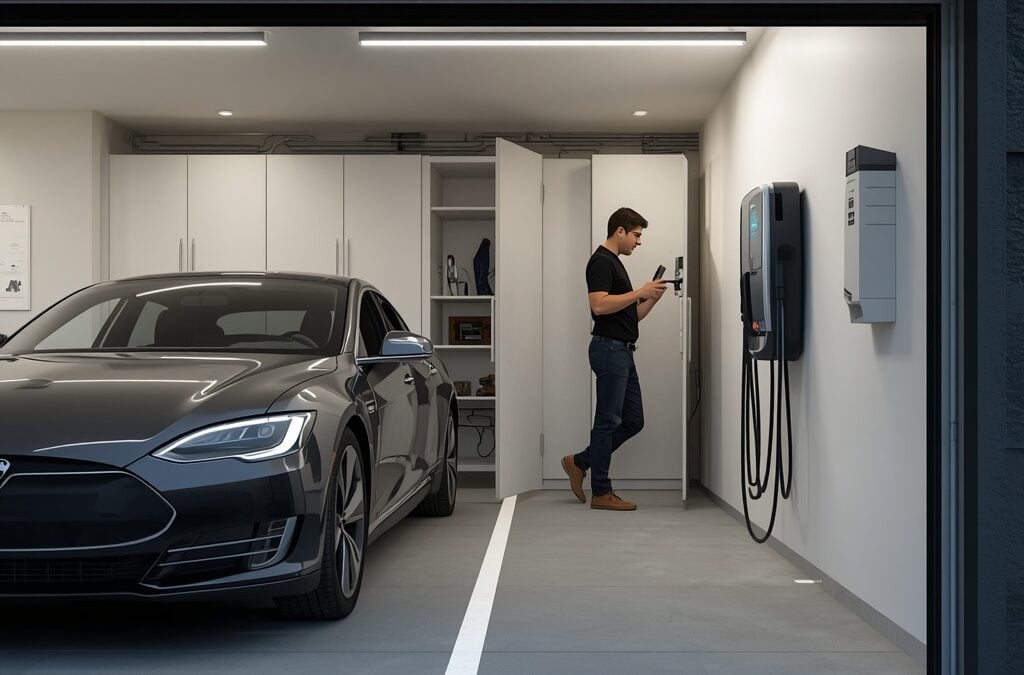
Preparing your home for an EV charger installation starts with assessing your electrical panel’s capacity, choosing between a Level 1 or Level 2 charger, and upgrading your panel if it can’t handle the additional load. A licensed electrician should evaluate your wiring, install a dedicated circuit, and confirm the work meets local building codes before you plug in.
Electric vehicles are no longer a niche choice. More homeowners across Salt Lake City, Sandy, Riverton, and the surrounding Utah communities are making the switch, and with that shift comes a growing need for reliable home charging. Installing a charger in your garage or driveway sounds simple enough, but the electrical work behind it is anything but an afterthought.
Your home’s electrical system was likely designed decades ago, long before anyone anticipated plugging a car into a wall outlet. Without the right preparation, an EV charger can overload your panel, trip breakers, or create a genuine fire hazard. That’s why proper planning matters just as much as the installation itself.
This guide walks you through what to check, what to expect, and why working with an experienced electrician makes all the difference. Whether you’re searching for EV charger installation Salt Lake City homeowners trust or simply want to understand the process before making a call, here’s what you need to know.
How do I know if my home’s electrical panel can handle an EV charger?
Your electrical panel is the heart of your home’s power distribution system, and it’s the first thing to check before adding an EV charger. Most homes built before the last decade have panels rated for 100 to 150 amps, which may already be running close to capacity with HVAC systems, appliances, and everyday electronics.
A Level 2 EV charger typically requires a dedicated 40 to 60 amp circuit. If your panel is already stretched thin, adding that load without an upgrade can cause frequent breaker trips or, in worse cases, overheating.
Here’s what to check:
- Panel amperage: Look at the main breaker to see if your home has 100, 150, or 200 amp service.
- Available breaker slots: Older panels sometimes have no room left for a new dedicated circuit.
- Age and condition: Panels older than 25 to 30 years may not meet current safety standards regardless of available capacity.
Rather than guessing, it’s worth having a licensed electrician in Salt Lake City or a nearby electrician sandy utah team come out and run a full load calculation. This confirms exactly how much power your home uses and whether there’s room to spare.
Level 1 vs. Level 2 chargers: which one fits your home’s electrical setup?
Not all EV chargers place the same demand on your electrical system, so choosing the right type matters before any wiring decisions are made.
- Level 1 chargers plug into a standard 120-volt outlet, the same kind you’d use for a lamp or a phone charger. They require no special installation, but charging speed is slow, often adding only 3 to 5 miles of range per hour.
- Level 2 chargers run on a 240-volt circuit, similar to what powers an electric dryer, and can add 20 to 30 miles of range per hour. Most homeowners who drive daily prefer Level 2 for the convenience, but it does require a dedicated circuit and professional installation.
When deciding between the two, consider:
- How many miles you drive per day
- Whether your panel has room for a new 240-volt circuit
- Your long-term plans (a second EV down the road may justify the upgrade now)
For most households, a Level 2 charger installed by experienced electricians for EV charger installation is the more practical long-term investment.
What does an electrical panel upgrade for an EV charger involve?
If your assessment shows your panel can’t support a new charger, a panel upgrade salt lake city electricians perform is often the next step. This isn’t a minor fix. It typically means replacing your main panel with a higher-capacity unit, often moving from 100 amps to 150 or 200 amps.
Signs you may need this upgrade include:
- Frequent breaker trips even without an EV charger
- A panel that’s already at or near full capacity
- Visible rust, scorch marks, or outdated fuse-style panels
- A home built before 1990 that hasn’t been updated since
Panel upgrade costs vary based on your home’s size, panel type, and local labor rates, so it’s best to get a direct quote from a trusted electrical contractor in Salt Lake City Utah rather than rely on national averages that may not reflect Utah pricing.
Beyond making room for your EV charger, a panel upgrade improves overall home safety by reducing the risk of overloaded circuits and outdated wiring, benefits that extend well beyond charging your car.
Where should I install my EV charger, and what wiring does it need?
Location matters more than most homeowners expect. Garages are the most common choice since they offer weather protection and proximity to existing panels, but driveways and carports work too if wiring can be run safely.
A few things to plan for:
- Dedicated circuit: EV chargers should never share a circuit with other appliances. This is non-negotiable for both safety and code compliance.
- Distance from the panel: The farther the charger is from your electrical panel, the more wiring and conduit are needed, which affects both cost and installation time.
- Weatherproofing: Outdoor installations require weather-rated conduit and enclosures to protect wiring from Utah’s seasonal temperature swings.
An electrician familiar with basement electrical wiring services and whole-home layouts can help determine the most efficient path for running new circuits without unnecessary drywall or concrete work.
Do I need a permit for EV charger installation in Utah?
Yes. Most Utah municipalities require an electrical permit for EV charger installations, along with an inspection once the work is complete. This isn’t just red tape. Permits ensure the installation meets current safety codes and protects you if you ever file an insurance claim or sell your home.
Working with licensed electricians in Utah who handle permitting as part of their process takes this burden off your plate entirely. Unpermitted electrical work can also void manufacturer warranties on both your charger and your electrical panel, so it’s not a step worth skipping.
When choosing a contractor, look for:
- A valid Utah electrical contractor license
- Proof of insurance
- Familiarity with local code requirements in your specific city, whether that’s Sandy, Riverton, or Salt Lake City
Getting your home ready for the road ahead
Preparing your home for an EV charger comes down to a handful of key steps: assessing your panel’s capacity, choosing the right charger type, upgrading your electrical system if needed, planning the installation location carefully, and making sure everything meets local code. Skipping any one of these can lead to safety risks, failed inspections, or costly rework down the line.
Taking the time to prepare properly pays off in safety, efficiency, and a system built to last as your household’s energy needs grow. If you’re ready to move forward, Butler Electric offers experienced electrical services across Salt Lake City, Sandy, and Riverton, from panel upgrades to full EV charger installations.
Contact Butler Electric today to schedule an evaluation and get your home ready to charge with confidence.