A dead outlet is one of those household problems that stops you in your tracks. One minute your phone is charging, the next it’s not—and you’re left wondering what went wrong. While some outlet issues are easy to fix yourself, others point to something more serious.
This guide walks you through the most common causes of non-working outlets, practical troubleshooting steps you can safely take at home, and clear signs that it’s time to call a licensed electrician.
Why Is My Electrical Outlet Not Working? Common Causes
Before you can fix the problem, it helps to understand what likely caused it. Here are the most common culprits:
- Tripped circuit breaker: Your breaker panel is designed to cut power when a circuit gets overloaded. A single tripped breaker can knock out power to multiple outlets at once.
- Blown fuse: In older homes with fuse boxes instead of breaker panels, a blown fuse produces the same result—no power.
- Overloaded circuit: Plugging too many high-draw devices into the same circuit (think space heaters, microwaves, and power strips) can trip a breaker or damage an outlet over time.
- Tripped GFCI outlet: GFCI outlets—commonly found in kitchens, bathrooms, and garages—have a built-in safety mechanism that shuts off power when it detects a fault. When one trips, it can cut power to several nearby outlets.
- Loose wiring connections: Wiring behind the outlet can loosen over time, interrupting the connection and stopping power flow.
- Faulty or worn-out outlet: Outlets don’t last forever. A damaged or aging outlet may simply stop working and need replacing.
How to Troubleshoot an Outlet That Has Stopped Working
There are a few safe, straightforward steps you can take before picking up the phone. Work through them in order:
Step 1: Check Your Circuit Breaker Panel
Head to your breaker panel and look for any switches that are in the “off” position or sitting between “on” and “off.” If you find one, switch it fully off and then back on. This resets the breaker and may immediately restore power to the affected outlet.
Step 2: Test Nearby Outlets
Plug a lamp or phone charger into other outlets in the same room. If they’re also dead, you’re likely dealing with a tripped breaker or a larger circuit issue. If only one outlet has stopped working, the problem is probably local to that outlet.
Step 3: Look for a GFCI Outlet with a Reset Button
GFCI outlets have two small buttons in the center—one labeled “Test” and one labeled “Reset.” Press the “Reset” button firmly. If the outlet was tripped, this should restore power immediately. Keep in mind that a single GFCI outlet can control power to other outlets further along the same circuit, so check nearby outlets afterward.
Step 4: Use a Voltage Tester
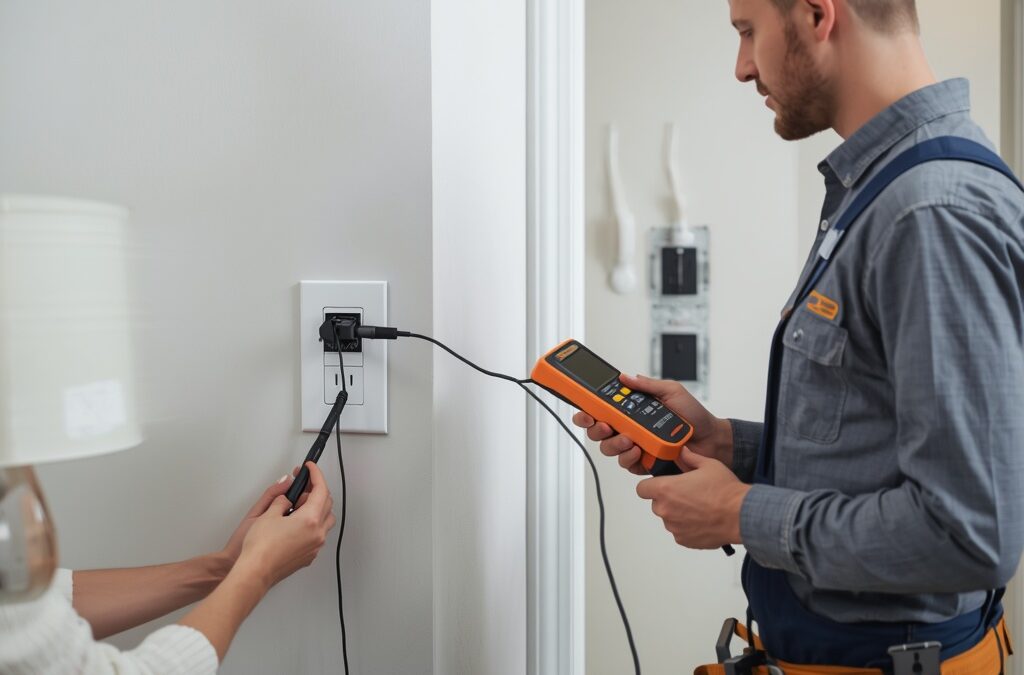
A non-contact voltage tester is an inexpensive tool that tells you whether an outlet is receiving power. Simply hold it near the outlet slots—no direct contact required. If it reads no voltage after you’ve reset the breaker and checked the GFCI, the outlet itself or its wiring is likely the issue.
Step 5: Inspect the Outlet for Visible Damage
Take a close look at the outlet cover and the surrounding wall. Signs of trouble include:
- Burn marks or discoloration around the outlet
- A cracked or broken outlet cover
- A burning or melting smell near the outlet
- Visible scorch marks on the plug after use
If you notice any of these, stop using the outlet immediately. These are signs of a potentially hazardous electrical problem that needs professional attention.
When to Call a Licensed Electrician
DIY troubleshooting goes a long way, but there are situations where calling a professional isn’t just the smart choice—it’s the safe one.
Contact a licensed electrician if:
- Resetting the breaker or GFCI doesn’t restore power
- Multiple outlets across different rooms have stopped working
- You smell burning near outlets, switches, or your breaker panel
- You see scorch marks, hear buzzing sounds, or feel warmth coming from an outlet
- Your home has older wiring that hasn’t been inspected recently
- You’re not confident working around electrical systems
Attempting electrical repairs without proper training can result in serious injury, property damage, or fire. Licensed electricians are trained to diagnose problems accurately, complete repairs to code, and make sure your home is safe.
Why Professional Electrical Help Matters
Some homeowners assume electrical repairs are a good candidate for a DIY weekend project. For simple tasks like swapping a light switch, that might be true but outlet wiring, panel work, and circuit repairs are a different matter.
Here’s why professional help is worth it:
- Code compliance: Licensed electricians ensure all work meets local electrical codes and passes inspection. This protects you legally and financially, especially when it comes time to sell your home.
- Accurate diagnosis: What looks like a faulty outlet might actually be a failing breaker panel, damaged wiring, or a deeper circuit issue. A professional can identify the real problem the first time.
- Fire prevention: Faulty wiring is one of the leading causes of house fires in the United States. According to the National Fire Protection Association (NFPA), electrical fires account for roughly 46,700 home structure fires per year. Professional repairs significantly reduce that risk.
- Long-term safety: Repairs done correctly the first time mean fewer problems down the road and greater peace of mind for your family.
For homeowners in the Salt Lake City area, Butler Electric provides reliable residential electrical repair services across Sandy, Riverton, Draper, South Jordan, and the broader Wasatch Front. With over 25 years of experience, a team of fully licensed electricians, and a reputation built on transparency and honest pricing, Butler Electric handles everything from outlet repairs to electrical panel upgrades and EV charger installation in Salt Lake City. Whether it’s a single dead outlet or a whole-home wiring concern, their team arrives prepared and gets the job done right.
Stay Safe: Electrical Tips Every Homeowner Should Know
Even when outlets are working fine, a few simple habits can prevent future problems:
- Avoid overloading a single outlet or power strip with too many high-draw appliances
- Have your electrical system inspected periodically, especially in older homes
- Replace two-prong outlets with three-prong, grounded outlets where possible
- Install GFCI outlets in bathrooms, kitchens, garages, and outdoor areas if they aren’t already in place
- Never ignore warning signs like flickering lights, warm outlets, or unexplained tripped breakers
Don’t Leave Electrical Problems to Chance
A non-working outlet is sometimes a minor inconvenience and sometimes an early warning sign of something more serious. Taking the time to troubleshoot carefully, and knowing when to hand it off to a professional, keeps your home safe and your electrical system running reliably.
If you’ve worked through the steps above and still can’t restore power, or if anything you’ve found looks or smells off, don’t wait. The licensed electricians at Butler Electric are ready to help homeowners across Salt Lake City, Sandy, and surrounding Utah communities with fast, professional electrical repair.
Don’t risk your home’s safety on an electrical problem you can’t identify. Contact Butler Electric today to schedule professional electrical repair.