
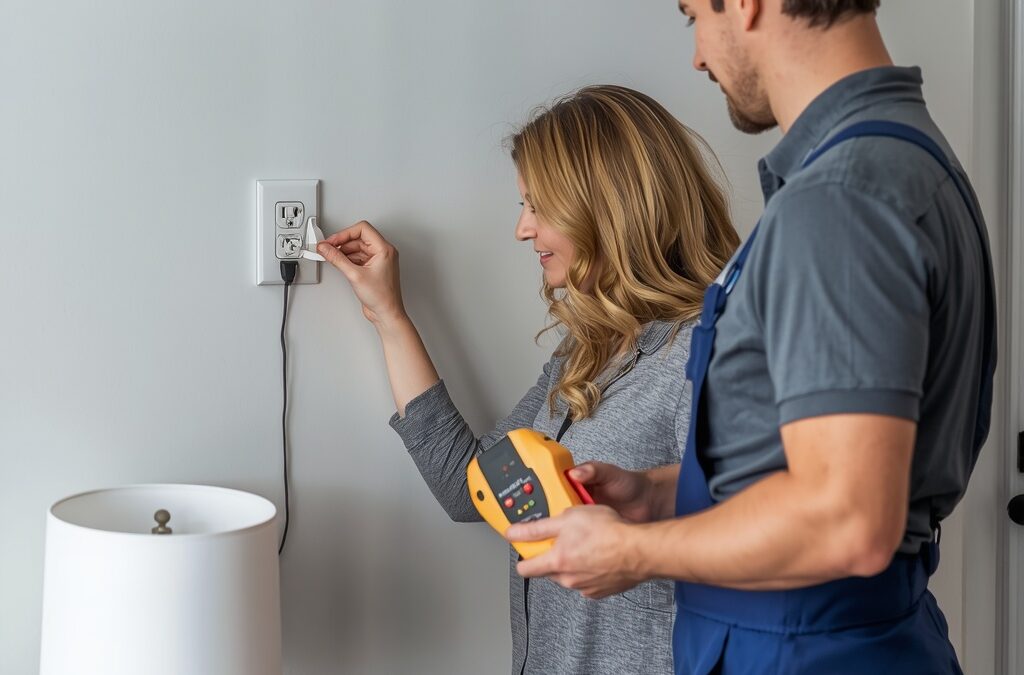
Electrical fires are one of the most preventable home hazards, yet they remain one of the most common. Arc Fault Circuit Interrupters (AFCIs) are a proven technology designed to detect the specific electrical conditions that lead to fires before any damage occurs. This guide explains how AFCIs work, where they’re required, and what homeowners can do right now to protect their families.
What Is an AFCI and How Does It Work?
An Arc Fault Circuit Interrupter is a safety device that monitors the electrical current flowing through a circuit. When it detects the irregular patterns associated with dangerous electrical arcing, it automatically shuts the circuit off.
Standard circuit breakers are designed to respond to overloads and short circuits — situations where too much current flows at once. AFCIs do something different. They use sophisticated electronics to recognize the specific signature of an arc fault, which can occur at much lower current levels than a standard breaker would ever trip. That’s a critical distinction. A regular breaker might let a dangerous arc continue for hours without ever responding.
There are two main types of AFCIs:
- Branch/feeder AFCIs — Protect the wiring between the panel and the first outlet in a circuit
- Combination AFCIs — Protect the entire circuit, including branch wiring and any connected cords or devices. These are the type required by most current electrical codes.
Why AFCI Protection Is Critical for Residential Homes
What causes electrical fires in the home?
According to the National Fire Protection Association (NFPA), electrical fires account for an estimated 46,700 home fires each year in the United States, resulting in approximately 390 deaths, 1,440 injuries, and $1.5 billion in property damage annually. A significant portion of these fires start inside walls, above ceilings, or in other concealed spaces where they go undetected until serious damage has already occurred.
Arc faults are a leading cause. They occur when electricity jumps across a gap in a damaged, deteriorated, or improperly installed wire. This jumping — or arcing — generates intense heat that can ignite nearby materials like insulation, wood framing, or drywall.
Common causes of arc faults include:
- Damaged wiring from nails or screws driven through walls
- Worn or aging insulation on older wiring
- Loose connections at outlets or switches
- Overloaded extension cords or damaged appliance cords
- Rodents chewing through cables
The danger is that arc faults are largely invisible. There’s no smell, no flickering light, and no tripped breaker to warn you. By the time a fire becomes apparent, it may already be spreading inside the wall.
AFCI Requirements and National Electrical Code Updates
What rooms require AFCI protection under current NEC guidelines?
The National Electrical Code (NEC) has expanded AFCI requirements significantly over the past two decades. Here’s a broad timeline:
- 1999: AFCIs first required in bedroom circuits
- 2008: Extended to cover family rooms, dining rooms, living rooms, parlors, libraries, dens, sunrooms, and closets
- 2014: Requirements expanded to include kitchens, laundry rooms, and all 120-volt circuits in most habitable areas
- 2017–2020: Further refinements brought nearly all indoor areas of new residential construction under AFCI protection requirements
Under the 2023 NEC, combination-type AFCI breakers are required for virtually all 120-volt, 15- and 20-amp branch circuits supplying outlets or devices in dwelling units. This covers bedrooms, living areas, hallways, kitchens, laundry rooms, garages, and more.
It’s worth noting that state and local jurisdictions do not always adopt the latest NEC immediately. Some areas operate on older code editions. A licensed electrician in Salt Lake City or surrounding areas can confirm which version of the code applies to your specific location and project.
Do AFCI requirements apply to older homes?
Existing homes are generally not required to retrofit AFCI protection unless they are undergoing permitted renovations or adding new circuits. However, many electrical experts and fire safety professionals strongly recommend upgrading older homes voluntarily — particularly those with aging wiring or original panels.
Where Should AFCIs Be Installed?
Which areas of the home benefit most from AFCI protection?
While code requirements continue to expand, here’s a room-by-room breakdown of where AFCI protection is most commonly required or recommended:
- Bedrooms: The original AFCI requirement began here for good reason. Bedrooms contain lamps, phone chargers, electric blankets, and extension cords — all common arc fault sources.
- Living rooms and family rooms: High device density and frequent cable movement make these rooms a risk.
- Kitchens: Multiple appliances running on shared circuits can create arcing conditions, especially in homes with older wiring.
- Laundry rooms: Dryers and washing machines draw significant power, and vibration can loosen connections over time.
- Garages: Power tools and infrequently inspected outlets create conditions where arc faults can develop unnoticed.
- Hallways and basements: Often overlooked, these areas still contain wiring and outlets that benefit from arc fault protection.
For the most comprehensive protection, upgrading the entire panel with combination AFCI breakers is the most effective approach. This ensures every circuit in the home is monitored, rather than relying on individual outlet-level devices.
How to Install and Maintain AFCI Protection
What are the options for installing AFCI protection in a home?
There are two main installation approaches:
- AFCI breakers — Installed at the electrical panel, these protect the entire circuit. They replace standard circuit breakers and are the preferred method for whole-home protection.
- AFCI outlets — Installed at the first outlet in a circuit, these protect downstream devices and wiring from that point forward. They don’t offer full circuit protection on their own.
Should I install AFCIs myself or hire a licensed electrician?
AFCI breaker installation involves working inside a live electrical panel, which carries serious risk of electric shock. For most homeowners, hiring a licensed electrician is the safest and most reliable option. A professional can also confirm that the devices are compatible with your specific panel brand, since not all AFCI breakers are universally compatible.
If you’re in the Salt Lake City area, a qualified electrician in Sandy or elsewhere in the Wasatch Front can assess your panel, recommend the right devices, and ensure everything is installed to code.
Cost estimates:
- AFCI breakers typically range from $35 to $80 per breaker, depending on brand and amperage
- Professional installation costs vary by location and panel complexity, but budget roughly $100 to $200 per circuit for labor
- A full-panel AFCI upgrade in an average home may cost between $1,500 and $4,000, depending on the number of circuits and the condition of existing wiring
How do you test and maintain AFCIs?
Testing is straightforward. Most AFCI breakers and outlets include a built-in test button. Press it monthly to verify the device responds by tripping. If it doesn’t trip when tested, replace the device. Also inspect your breakers periodically for signs of heat damage or corrosion, and have your electrical system professionally inspected every few years.
How long do AFCIs last, and do they come with a warranty?
Most AFCI breakers are rated for the life of the panel under normal conditions. Many manufacturers offer warranties ranging from one to five years. If your home has had an AFCI breaker for more than 10 years without any testing or inspection, having it evaluated by a licensed electrician is a reasonable precaution.
Protect Your Home Before a Problem Starts
Arc faults don’t announce themselves. They develop quietly, inside walls and behind outlets, and by the time they cause visible damage, the consequences can be severe. AFCI protection is one of the most effective steps a homeowner can take to reduce electrical fire risk, and the technology is more accessible and affordable than ever.
For homeowners in the Salt Lake City area, Butler Electric provides professional electrical services, panel upgrades, and full home electrical inspections. With over 25 years of experience serving communities across Sandy, Riverton, and the greater Salt Lake Valley, Butler Electric’s licensed team can assess your current protection, identify any gaps, and recommend the right solution for your home.
Ready to make your home safer?
Contact Butler Electric today to schedule a professional electrical inspection and find out whether your home has the arc fault protection it needs.