
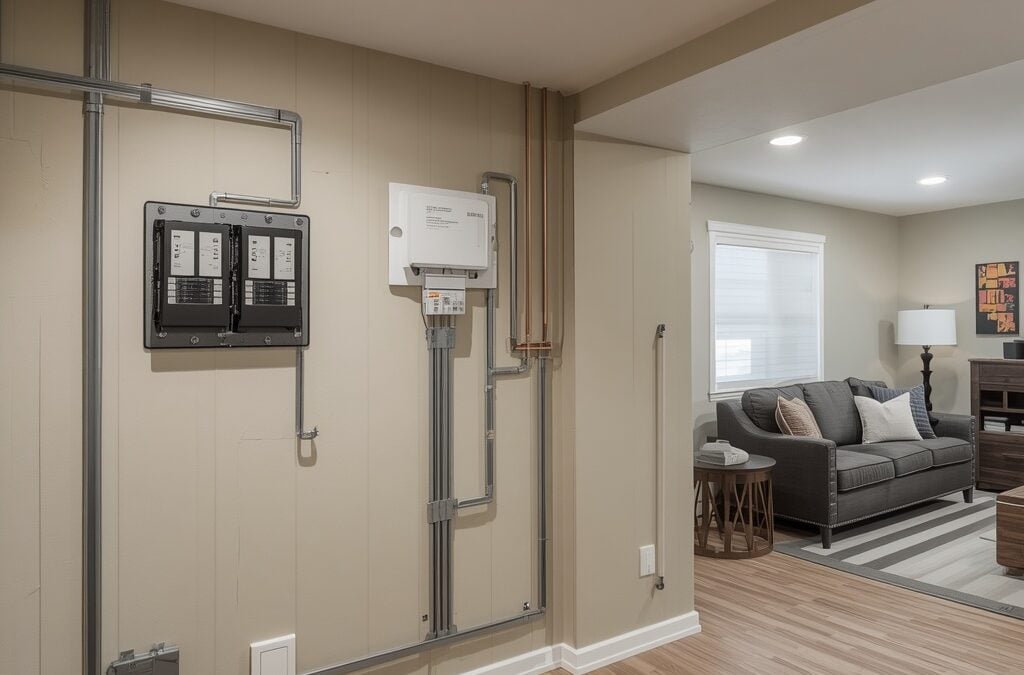
Basement remodel electrical planning involves checking local codes, assessing your home’s panel capacity, planning outlets and circuits for expected use, choosing appropriate lighting, and installing GFCI protection for moisture-prone areas. Hiring a licensed electrician for basement wiring services ensures the work passes inspection and keeps your family safe from fire or shock hazards.
Turning an unfinished basement into a livable space is one of the most rewarding home improvement projects you can take on. It adds square footage, boosts your home’s value, and gives your family more room to spread out. But before you start hanging drywall or picking out paint colors, there’s a less glamorous step that deserves your full attention: electrical planning.
Basements present unique electrical challenges. They’re below grade, often prone to moisture, and may still be running on outdated wiring that was never designed for a finished living space. Skipping proper planning can lead to code violations, failed inspections, or worse, an electrical fire. This guide walks you through what homeowners need to know before starting a basement electrical project, from safety codes to lighting design to when it’s time to call in a professional.
What Electrical Codes and Permits Apply to Basement Remodels?
Every basement remodel involving new wiring, outlets, or fixtures typically requires a permit from your local building department. Codes vary by city and county, but most basement projects must meet requirements for outlet spacing, circuit capacity, and moisture protection.
Permits exist for a reason. They ensure an inspector reviews the work at key stages, catching problems before walls get closed up. Skipping this step might save time upfront, but it can cause serious headaches later, especially if you try to sell your home and an uninspected basement surfaces during a home inspection.
Why Hiring a Licensed Electrician Matters for Code Compliance
Working with licensed electricians in Utah gives you confidence that your project meets current code requirements. A qualified electrician for basement wiring will know exactly what your local jurisdiction expects, from GFCI placement to circuit sizing, and will pull the correct permits on your behalf.
Common basement code requirements include:
- GFCI protection on all basement outlets
- Properly sized circuits for lighting and outlets
- Smoke detectors wired into the home’s electrical system
- Adequate outlet spacing along finished walls
- Egress lighting near stairways and exits
How Do I Know if My Electrical Panel Can Handle a Basement Remodel?
Before adding new circuits for your basement, it’s worth taking a hard look at your home’s existing electrical panel. Many older homes were built with panels that simply don’t have the capacity for additional living space, especially if you’re adding a kitchenette, bathroom, or home theater setup.
A few signs suggest your system needs professional evaluation:
- Breakers trip frequently, even under normal use
- Your panel is more than 20 to 25 years old
- You’re already close to your panel’s rated capacity
- You notice flickering lights when appliances turn on
- Your home still uses fuses instead of breakers
If any of these sound familiar, a panel upgrade in Salt Lake City may be necessary before your basement project can move forward safely. An experienced electrician can calculate your home’s total load requirements and tell you whether your current panel can support the new circuits your basement remodel will need.
How Should I Plan Circuits and Outlets for a Finished Basement?
Once you know your panel can handle the additional load, the next step is mapping out circuits and outlet placement. Basements often serve multiple purposes: a media room, home office, guest suite, or workshop, and each use case comes with different electrical demands.
A few planning principles to keep in mind:
- Outlets should generally be placed every 12 feet along finished walls, per common code standards
- High-demand appliances (space heaters, mini fridges, sump pumps) should have dedicated circuits
- Avoid overloading a single circuit with too many outlets or fixtures
- Plan for future needs, like a home gym or entertainment setup, so you’re not retrofitting later
This is one area where a remodel electrical services provider earns their fee. They can help you avoid the common mistake of underplanning outlets, which often leads to a tangle of extension cords once the basement is finished.
What Lighting Options Work Best in a Basement?
Basements typically lack natural light, which makes artificial lighting design especially important. A mix of lighting types usually works best:
- Recessed lighting provides even, ambient light without taking up headroom, which matters in basements with lower ceilings.
- Track lighting works well for highlighting specific areas, like a workspace or entertainment center.
- LED fixtures are energy-efficient and generate less heat than older bulb types, an important consideration in enclosed spaces.
If your basement has small windows or window wells, consider supplementing natural light with well-placed fixtures nearby to brighten those corners. For unfinished basements being used for storage or utility purposes, simpler overhead lighting may be sufficient, while finished living spaces benefit from layered lighting that includes ambient, task, and accent options.
Why Is GFCI Protection Critical in Basement Electrical Work?
Basements sit below grade, which makes them more susceptible to moisture, humidity, and occasional flooding. Ground-fault circuit interrupters, or GFCIs, are designed to shut off power quickly if they detect a ground fault, significantly reducing the risk of electric shock.
GFCI outlets should be installed:
- Near any water source, including utility sinks or wet bars
- In areas prone to dampness, such as near exterior walls
- Anywhere outlets are within reach of a sump pump or dehumidifier
- Throughout the basement as a general safety standard, even in dry areas
For added protection, many electricians recommend combining GFCI outlets with surge protection and moisture-resistant electrical boxes for basement electrical wiring services, particularly in homes located in areas with a history of water intrusion.
When Should I Hire a Licensed Electrician for a Basement Remodel?
The short answer: before you start. Electrical work is one area of a remodel where cutting corners can lead to expensive, dangerous consequences. Working with electrical contractors in Salt Lake City, Utah, who specialize in remodel projects means you get a professional who understands both the technical requirements and the inspection process.
During the planning phase, a good electrician will walk your space, ask about your intended use, and design a layout that balances function with code compliance. During installation, they’ll handle everything from running new circuits to installing fixtures, and they’ll coordinate with your local inspector to make sure everything passes without delays.
Hiring a professional also protects you long-term. Faulty DIY wiring is a leading cause of house fires, and insurance companies may deny claims tied to unpermitted electrical work. A licensed team brings peace of mind that the job was done right the first time.
Bringing It All Together for Your Basement Project
Basement electrical planning touches nearly every part of your remodel, from the codes you need to follow to the panel capacity that determines what’s even possible. Getting it right from the start saves you time, money, and potential safety risks down the road.
Whether you’re in Salt Lake City, Sandy, Riverton, or the surrounding Utah communities, working with an experienced team that understands basement wiring, panel upgrades, and lighting design can make the difference between a stressful project and a smooth one.
Ready to start planning your basement remodel?
Contact Butler Electric today to schedule a consultation with a licensed electrician who can help bring your basement project to life safely and up to code.