
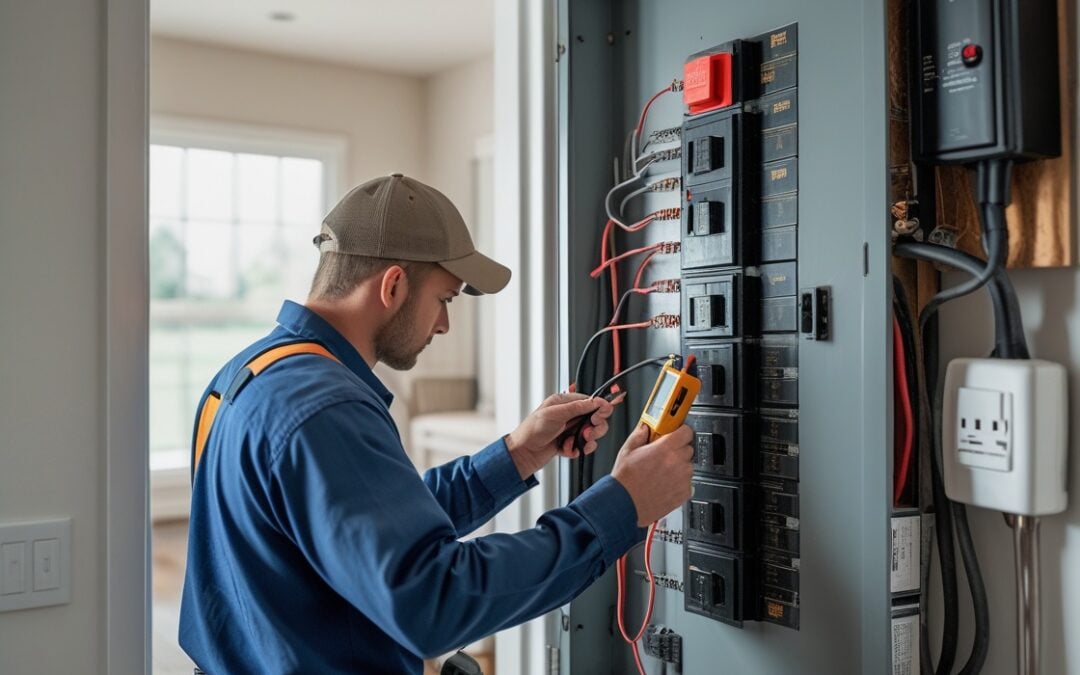
A circuit breaker that keeps tripping is more than just an inconvenience. It is your home’s electrical system sending you a warning signal. Understanding what that signal means can be the difference between a quick fix and a serious safety hazard.
Circuit breakers are designed to protect your home. When too much electrical current flows through a circuit, the breaker trips and cuts the power before any damage can occur. Think of it as a built-in safety switch. But when it trips repeatedly, something more significant is usually going on.
This post breaks down the most common reasons your circuit breaker keeps tripping, what you should do about it, and when it is time to stop troubleshooting and call a licensed electrician.
Common Reasons Your Circuit Breaker Keeps Tripping
Overloaded Circuits
An overloaded circuit is the most frequent cause of a tripping breaker. This happens when you draw more electricity through a circuit than it is designed to handle.
Common culprits include:
- Space heaters and electric blankets
- Hair dryers and curling irons
- Microwaves, toasters, and other kitchen appliances
- Multiple high-powered devices are plugged into the same outlet or power strip
A one-time trip is not cause for alarm. But if your breaker trips every time you use certain appliances, the circuit is consistently being pushed past its limit. Over time, persistent overloading puts stress on your wiring and increases the risk of overheating or fire.
Short Circuits
A short circuit occurs when a hot wire comes into direct contact with a neutral wire. This causes a sudden, large surge of current that immediately triggers the breaker.
Short circuits are more serious than overloads. Signs to watch for include:
- A burning smell near an outlet or switch
- Visible scorch marks around an outlet
- A popping or crackling sound when the breaker trips
If you notice any of these signs, do not attempt to reset the breaker and move on. A short circuit requires professional attention right away, as it presents a real fire risk.
Ground Faults
A ground fault is similar to a short circuit, but it occurs when a hot wire contacts a grounded part of the system, such as a metal outlet box or the ground wire itself. These are especially common in areas where water and electricity are close together, including bathrooms, kitchens, garages, and outdoor spaces.
GFCI (Ground Fault Circuit Interrupter) outlets are specifically designed to detect ground faults and shut off power within milliseconds. If your GFCI outlet is tripping repeatedly, it is picking up on a real problem that needs to be addressed rather than ignored.
Faulty Appliances
Sometimes the issue is not the circuit itself but a malfunctioning appliance connected to it. A damaged power cord, worn-out motor, or internal wiring fault can cause a device to draw an irregular amount of current, which trips the breaker.
To identify a faulty appliance:
- Unplug all devices on the affected circuit
- Reset the breaker and plug each device back in one at a time
- If the breaker trips after you plug in a specific item, that appliance is likely the problem
Replacing or repairing the faulty device usually resolves the issue.
Old or Damaged Wiring
Older homes often have wiring that was not built to handle modern electrical demands. Insulation on old wires can crack or deteriorate over time, increasing the risk of shorts, sparks, and electrical fires.
If your home was built several decades ago and you have not had a recent electrical inspection, aging wiring could be the source of your tripping problems. This is not something to put off. Deteriorated wiring is a leading cause of residential electrical fires in the United States, according to the Electrical Safety Foundation International (ESFI).
A licensed electrician can assess the state of your wiring and advise on whether repairs or a full rewire are needed.
Issues with the Breaker Itself
Circuit breakers do not last forever. Over time, the internal components wear out, and the breaker may start tripping even when the circuit is not overloaded.
Signs that a breaker may be failing include:
- The breaker will not stay reset
- It feels hot to the touch
- It shows visible signs of damage or burning
- It trips under very light electrical loads
A worn-out breaker needs to be replaced by a qualified electrician. Attempting to repair or bypass a faulty breaker is dangerous and should never be tried at home.
What to Do When Your Circuit Breaker Trips
Safety First
Before anything else, unplug or turn off any devices that were running when the breaker tripped. This reduces the load on the circuit and helps prevent the same thing from happening again as soon as you reset the breaker.
How to Reset the Breaker Safely
- Go to your electrical panel and locate the tripped breaker. It will be in the middle position or switched to “off.”
- Firmly push the breaker all the way to the “off” position first.
- Then flip it back to the “on” position.
- If it trips again immediately, stop. Do not keep resetting it.
Troubleshooting the Circuit
Once the breaker is reset, try to identify what caused the trip:
- Unplug appliances: Remove devices from the affected circuit and see if the breaker holds.
- Spread the load: Move some appliances to different circuits to avoid overloading one.
- Check for damage: Look at cords and outlets for any visible signs of wear or burning.
When to Call a Professional Electrician
Some situations are beyond DIY troubleshooting. Contact a licensed electrician if:
- The breaker trips repeatedly after being reset
- You notice burning smells, sparks, or scorch marks
- The breaker feels hot or shows signs of physical damage
- Multiple circuits are affected
- You are considering a panel upgrade in Salt Lake City or a surrounding area to handle increased electrical demand
These are signs that the problem is more serious than an overloaded circuit. An experienced electrician can diagnose the issue safely and fix it correctly the first time.
How to Prevent Your Circuit Breaker from Tripping in the Future
Understand Your Home’s Electrical Capacity
Every circuit in your home is rated for a specific amperage, typically 15 or 20 amps. Knowing which appliances are on which circuit helps you avoid accidentally overloading one.
Distribute Your Electrical Load Evenly
Avoid plugging multiple high-wattage devices into the same circuit. Spread your appliances across different outlets and circuits to keep the load balanced.
Schedule Regular Electrical Inspections
Having a licensed electrician inspect your home’s electrical system every few years can catch problems before they become serious. This is especially important in older homes where wiring may no longer meet current safety codes.
Consider Upgrading Your Electrical Panel
If your home is older, or you have added significant electrical demands like a home office, new appliances, or an EV charger installation in Salt Lake City, your current panel may no longer be sufficient. A panel upgrade gives your home the capacity it needs to handle modern power demands safely.
Get Your Electrical Issues Sorted Before They Get Worse
A tripping circuit breaker is rarely something you should ignore. It might be a simple fix like redistributing your appliances, or it could point to something that needs immediate professional attention, such as faulty wiring or a failing breaker panel.
The key is knowing when to stop troubleshooting and make the call. If your breaker keeps tripping, smells strange, or shows any signs of damage, it is time to bring in a professional.
Butler Electric is ready to help. With 25+ years of experience, a fully licensed team, and a reputation built on honest, reliable service, they are the electricians Salt Lake City homeowners turn to when it matters most.
Contact Butler Electric today, call (801) 598-3982 to schedule your appointment.